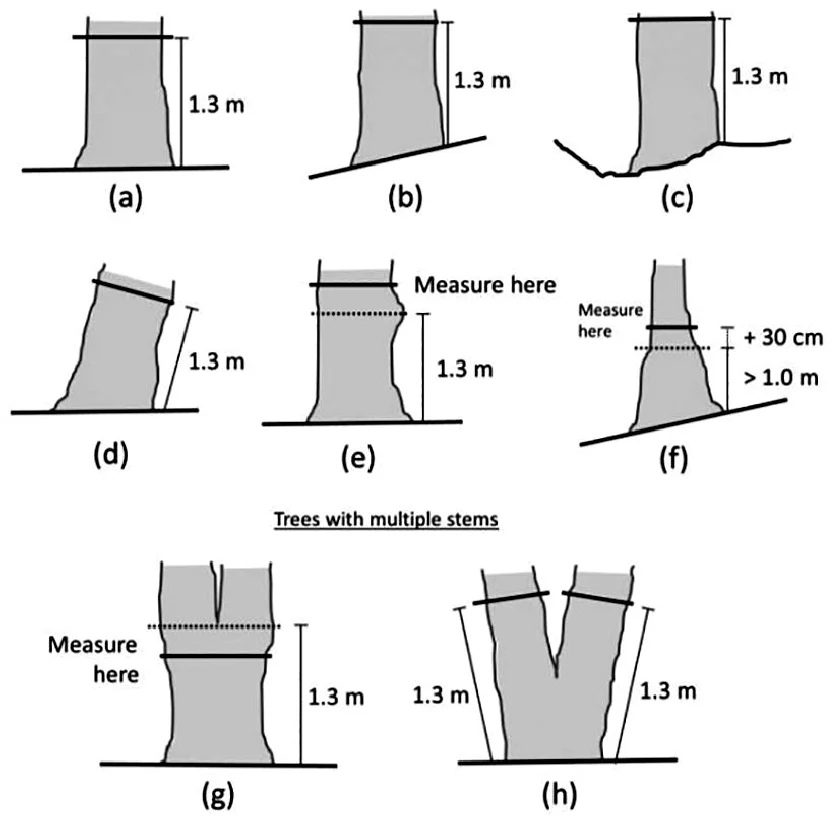
Tree DBH
Measure trunk diameter at approximately 1.37 m above ground level. DBH is a key input for biomass, carbon and ecosystem service calculations.
 Tree Resource Evaluation and Ecological Intelligence Network
treein™-tel
Tree Ecosystem Lens
treein™-tel converts simple field observations into a structured Tree Ecosystem Report that reveals what an individual tree contributes to the surrounding environment.
By combining species-specific parameters, tree metrics, location context, climatic references, allometric relationships and ecosystem-service assessment methods, the system translates tree data into measurable evidence on biomass, carbon, oxygen, air quality, water conservation, cooling benefits and structural value.
Species · Tree DBH · Tree Metrics · Location
tree observation data
environmental significance
tree metrics guide
Use the following visual guide to enter field measurements correctly. Accurate tree metrics improve the reliability of the Tree Ecosystem Report.
Measure trunk diameter at approximately 1.37 m above ground level. DBH is a key input for biomass, carbon and ecosystem service calculations.
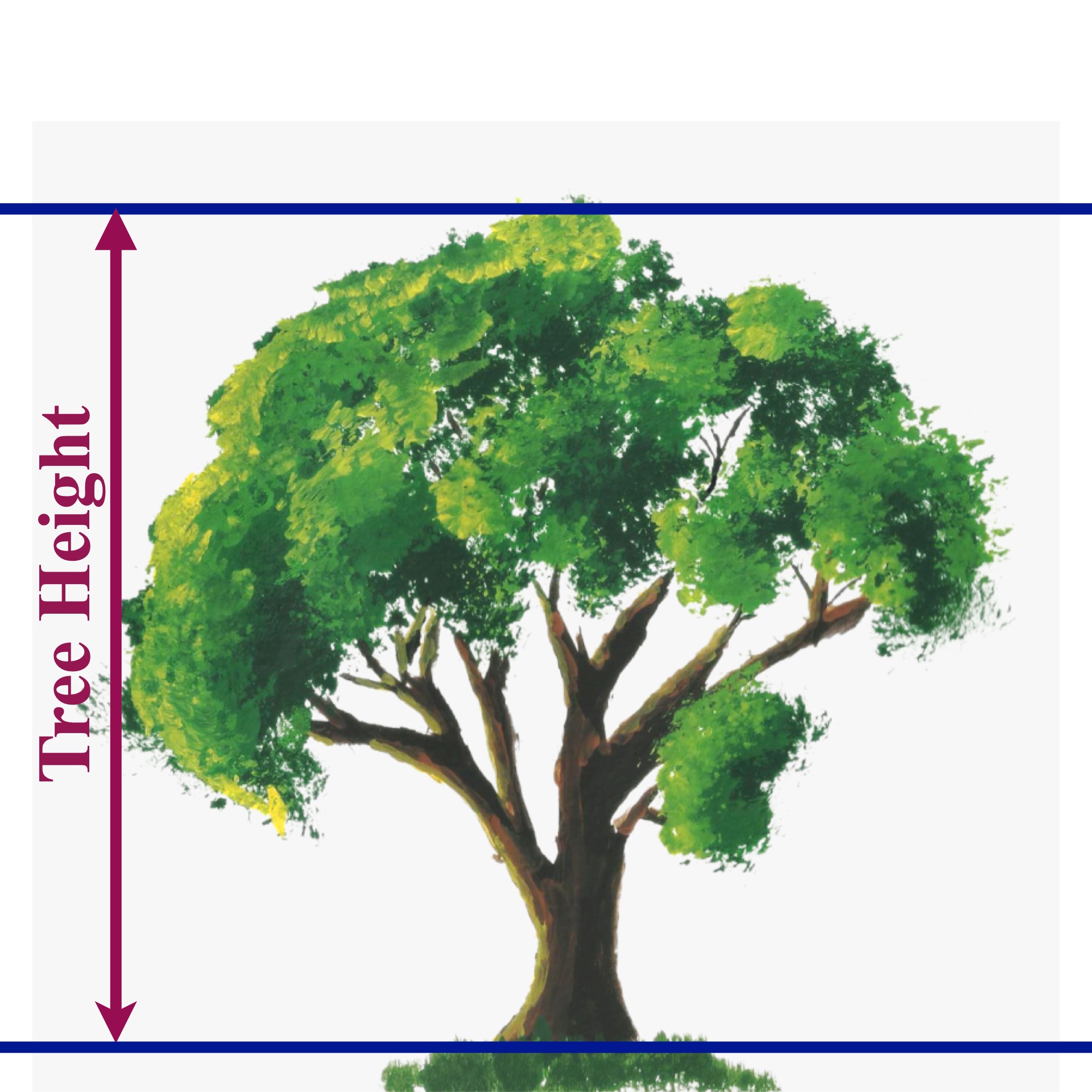
Measure total tree height from ground level to the highest live point of the crown.
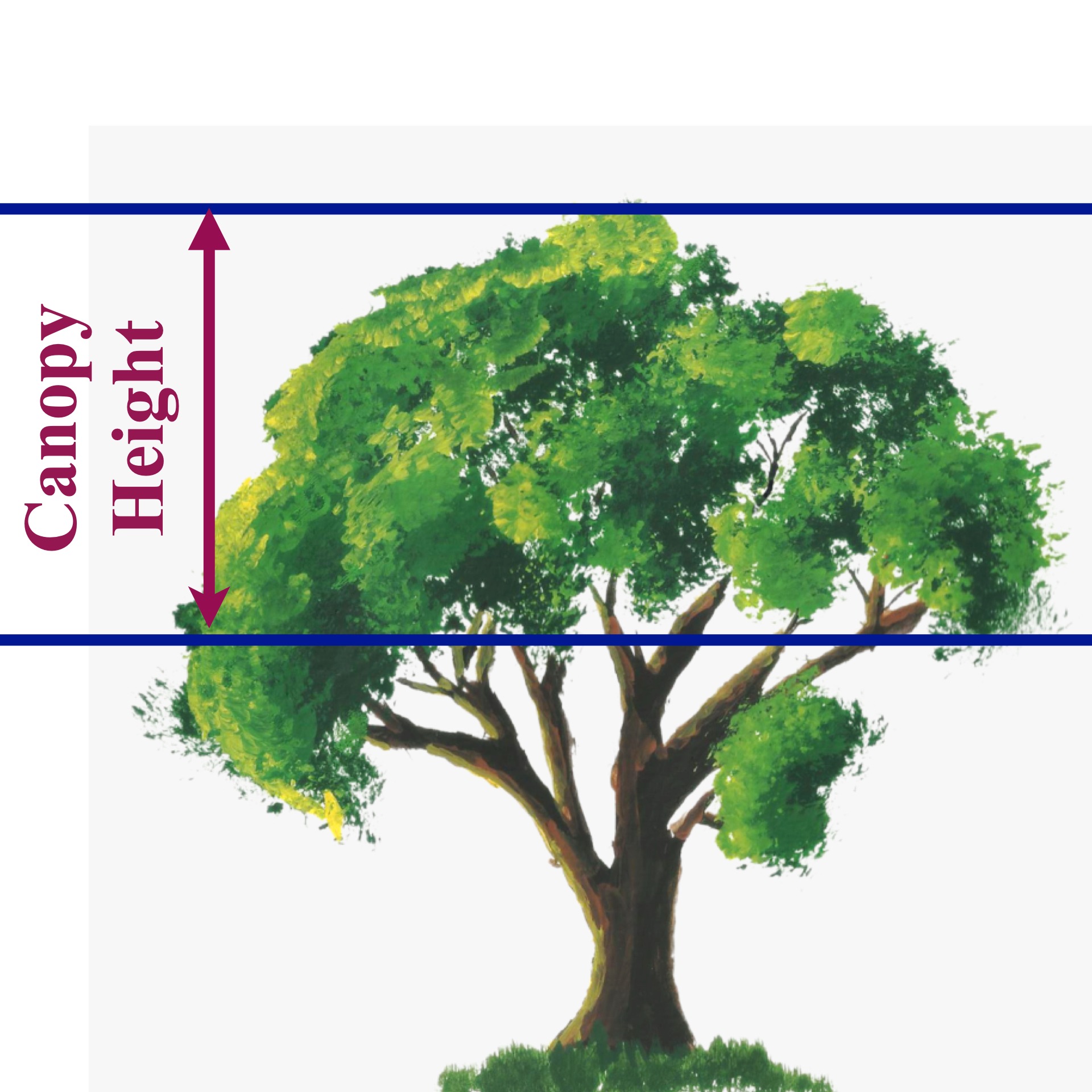
Measure the vertical depth of the live crown from the crown base to the crown top.
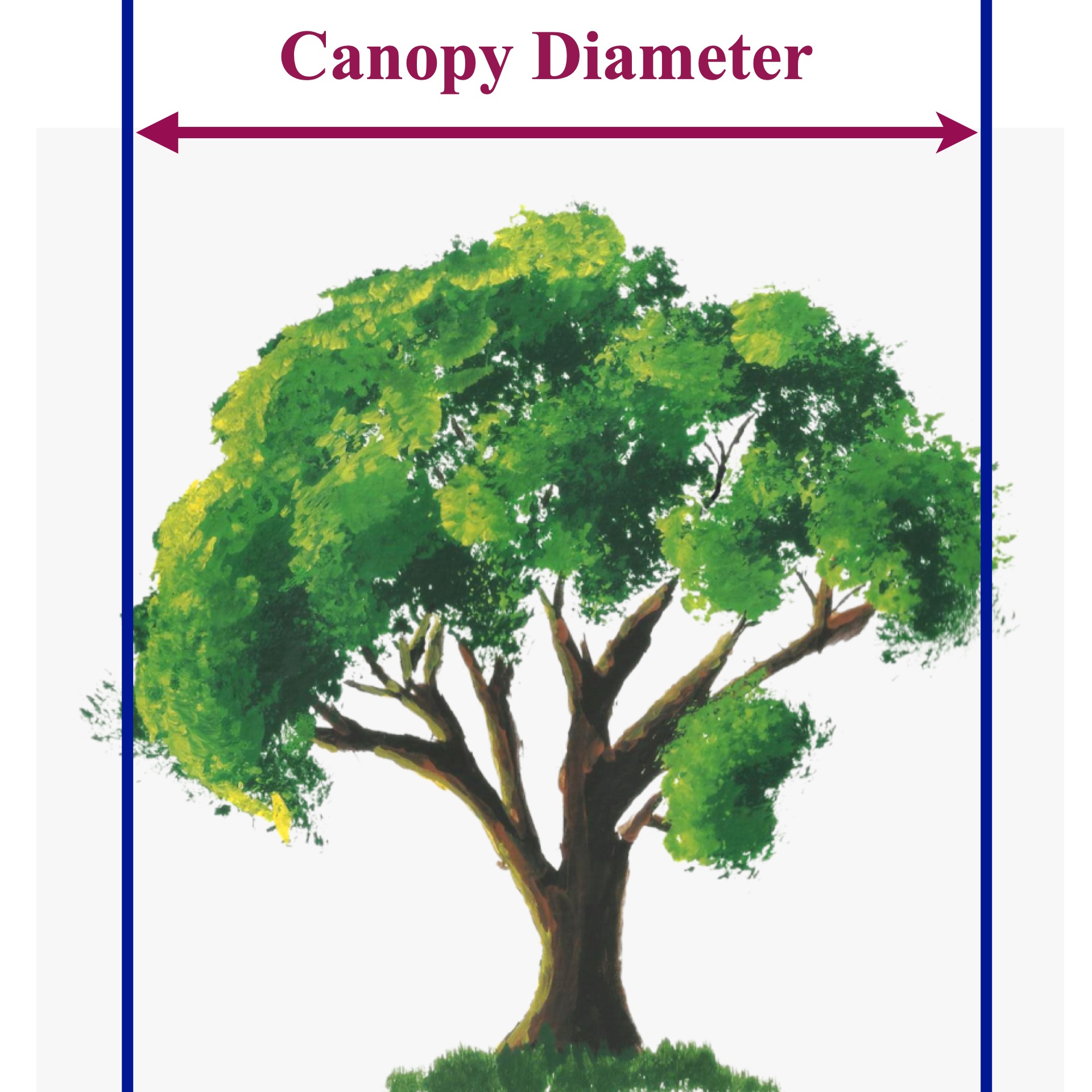
Measure the average crown width across the widest canopy spread.
scientific foundation
The system is structured around tree science, ecosystem-service assessment, carbon accounting, environmental modelling and location-specific interpretation.
assessment workflow
treein™-tel integrates tree measurements, species characteristics, location-specific environmental data and ecosystem-service assessment methodologies to generate scientifically structured Tree Ecosystem Reports.
why location matters
Rainfall, temperature, humidity, solar radiation and local environmental conditions influence tree growth, biomass accumulation, carbon sequestration and ecosystem performance. Pincode information helps treein™-tel contextualize the assessment to the tree’s local environment.
report output
DBH, height, canopy dimensions, crown characteristics and structural profile.
Biomass, carbon storage, CO₂ capture, annual sequestration and oxygen production.
Indicative air-quality benefits for particulate and gaseous pollutants.
Rainfall interception, avoided runoff and water conservation contribution.
Cooling, shade, UV moderation and urban heat island mitigation relevance.
Tree structural value using species, size, condition, location and appraisal logic.
Environmental benefits translated into annual CO₂-equivalent contribution.
Plain-language meaning for awareness, planning and ecological stewardship.
A tree is more than a biological organism. It stores carbon, produces oxygen, moderates climate, supports biodiversity, improves air quality and contributes to environmental resilience. treein™-tel translates these ecological functions into measurable environmental evidence through a Tree Ecosystem Report.